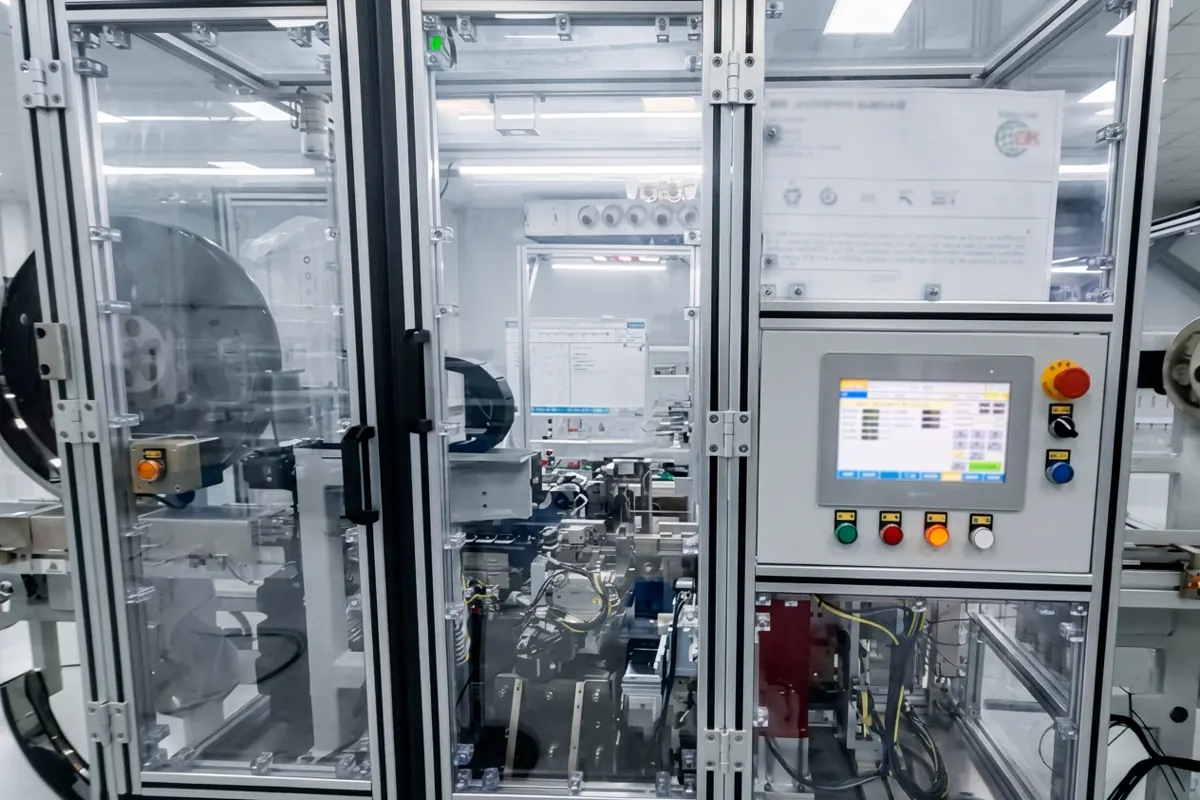
In a connector or PCB assembly line, pin insertion usually sets the pace. Every terminal has to be cut from its strip, formed, placed and checked before the next one arrives. Here is how our cam-driven pinning modules keep that rhythm at up to 12 insertions per second, and how the same line proves every pin it places.
One stroke: cut, pre-bend, insert
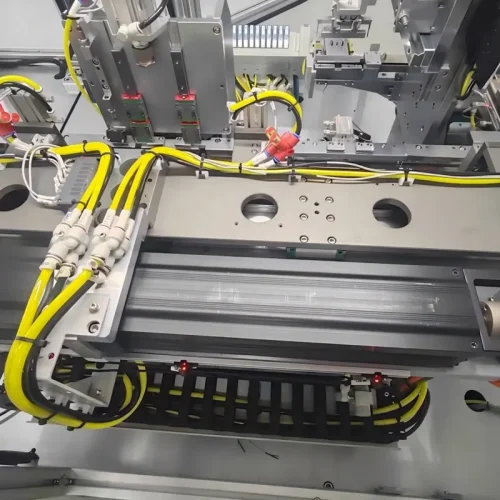
Our pinning modules are developed in-house. In a single cam-driven stroke, the terminal is cut from the reel, pre-bent and pressed into the housing or board. Because the movement is driven by a cam, the head follows exactly the same path every cycle, at a steady rate of up to 12 insertions per second.
Servo control positions the module for each pin, and vision guidance corrects the placement, so the speed of the cam does not come at the cost of accuracy.
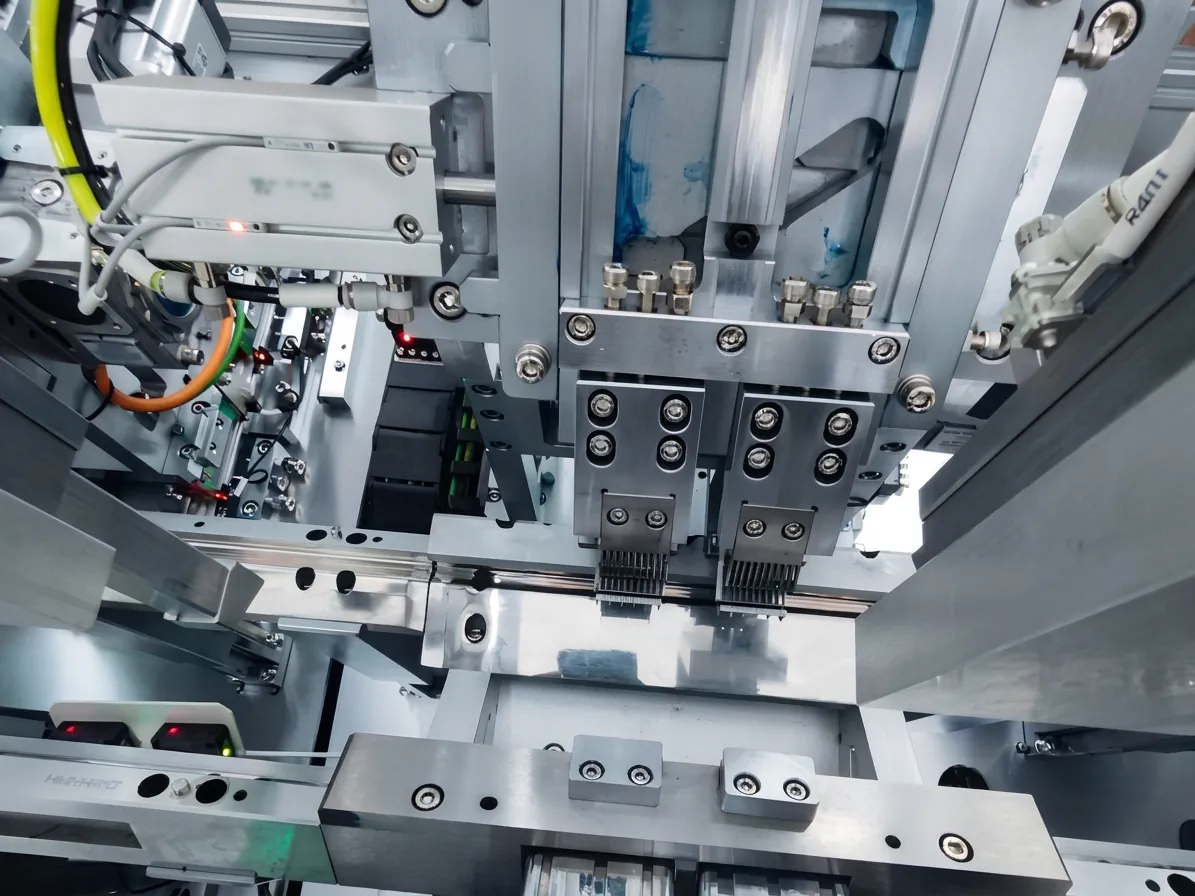
Bending one pin at a time
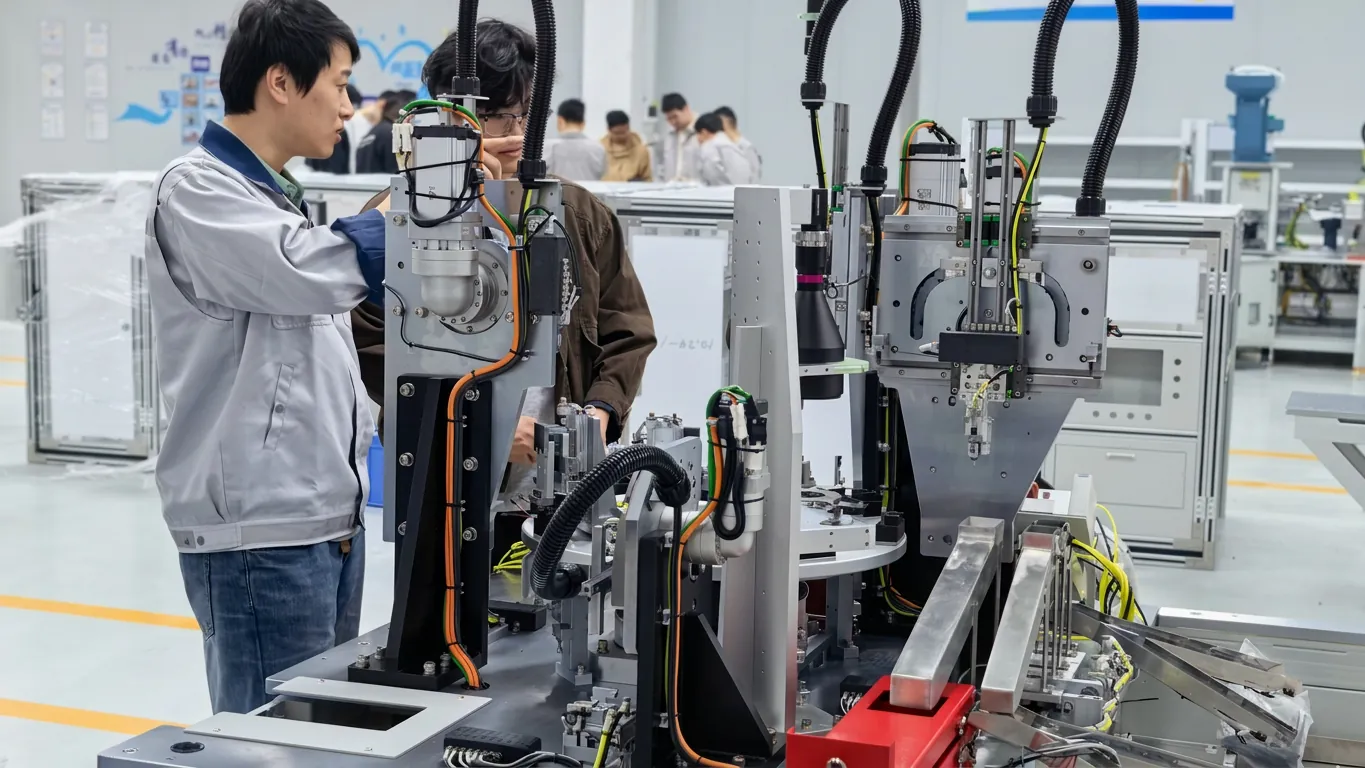
Once the rows are inserted, electronic-cam bending modules form them one pin at a time, for terminals such as SQP 0.63 and TAB 0.6. A new product does not mean a new station: the change is a chuck or a bending head.
On the GEN2 insertion and bending line, the process capability reaches a CMK of 1.67 or more.
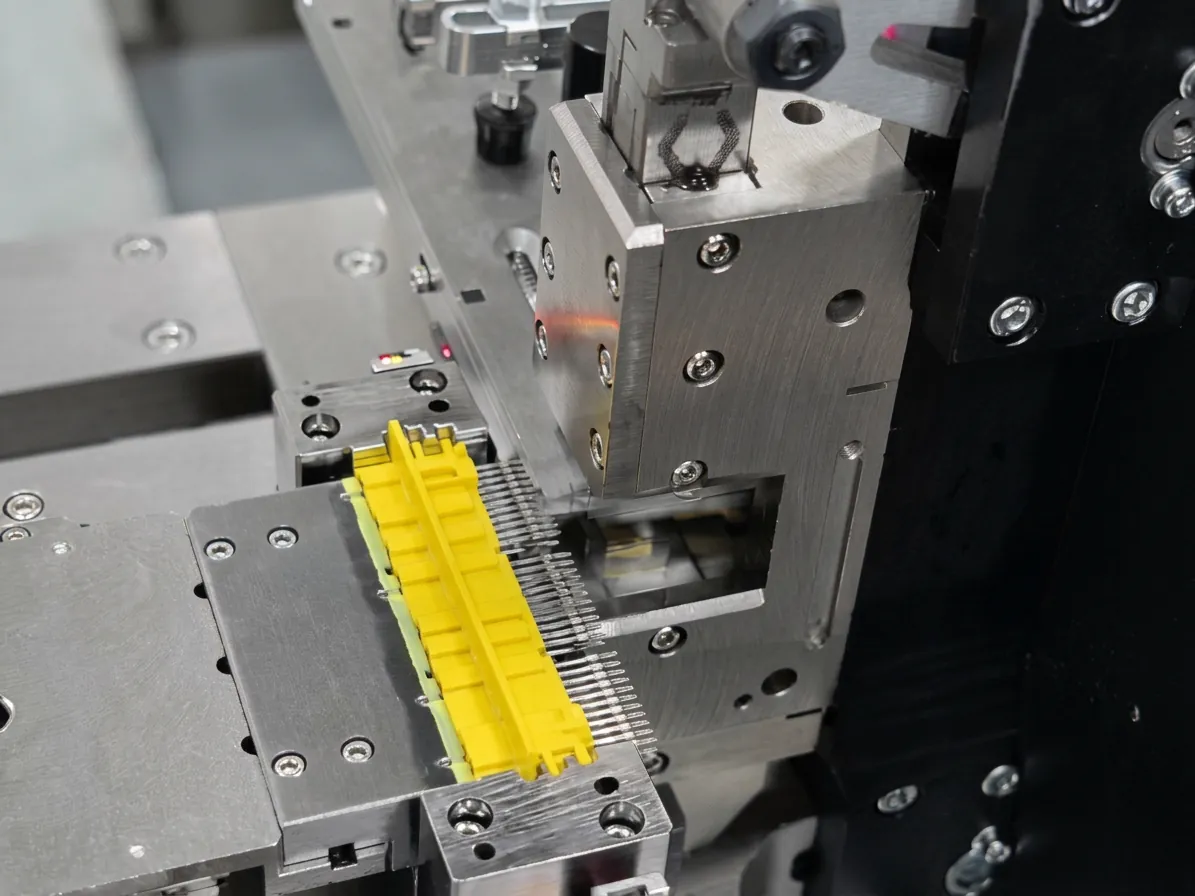
Checking every pin inline
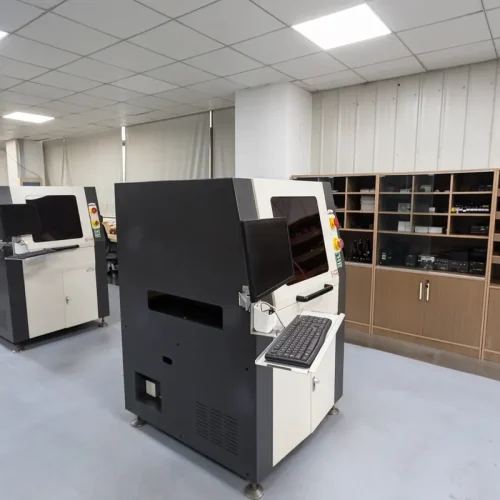
Speed only counts if every part is good. Missing pins, pin position and pin height are checked inside the line with 2D cameras and 3D line scanning, at a 0.01 mm level, using inspection software developed by our own vision team.
What to send us for a pin insertion project
- Your part: drawing or sample of the housing or board, and the terminal type.
- Your target cycle time and yearly volume.
- The number of variants that must run on the same line.
- Inspection and traceability requirements (vision checks, test data, product ID).
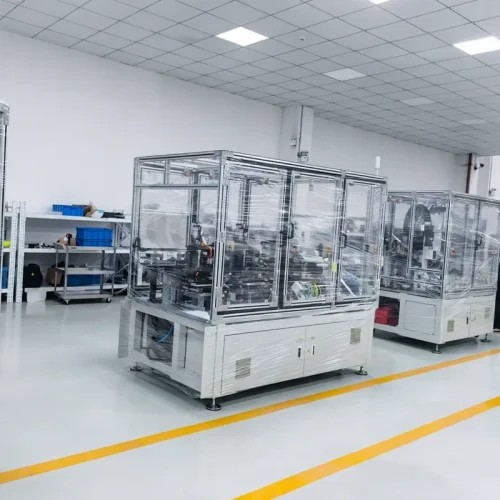
As an example, our GEN2 line runs 23P and 29P connectors on one line with no hardware changeover between variants, at a cycle time of 1.9 s or less, an OEE of 80 % or more and a single operator.